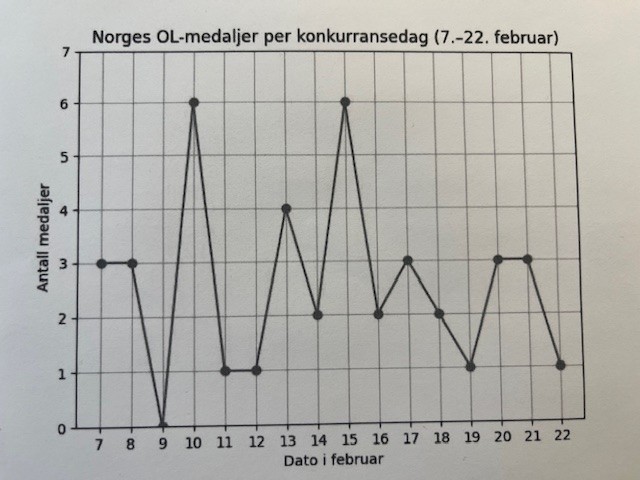
Norge satte rekord i antall gullmedaljer (18) i vinter-OL i Milano/Cortina, og satte også ny OL-rekord i totalt antall medaljer for én nasjon (41). Den norske suksessen skapte betydelig internasjonal oppmerksomhet, og toppidrettssjef Tore Øvrebø gikk fra intervju til intervju for å fortelle om hvordan norsk idrett er organisert og jobber. I CNN var fokuset blant annet å holde barn og ungdom lenge i idretten:
«We have to take care of everybody”
“Such a small country can’t afford to lose athletes whose talent might not be fully revealed until their later teens. Norwegian coaches don’t tend to mistake early bloomers for talented athletes.
“I find that many of the big sporting systems are more occupied with getting rid of people at the young age than develop many,” explained Øvebø. “Why do I say that? It’s all about selection and selection is another way of getting rid of people. We are few. We have to take care of everybody.”
Why Norway is dominating the Winter Olympics and what could US learn | CNN
«Nurture joy before chasing podiums”
Barneidrettsbestemmelsene opptar internasjonale medier, det gjør også det faktum at over 90 % av norske barn og unge er innom sitt lokale idrettslag i oppveksten. «Inside the games» skriver:
“Its development philosophy privileges longevity over precocity, as results are not officially recorded for children under 12, and league tables are generally avoided before adolescence. The logic is simple, even counterintuitive: nurture joy before chasing podiums; retain rather than prematurely select. The outcome, by Norwegian accounts, is a vast grassroots base, some 93% of children participate in organised sport.”
Inside The Games • Poker-faced, gold-laden: Norway makes It four
“When one athlete ends, younger ones are already coming up.”
For å lykkes i toppidretten, er det nødvendig å få til gode generasjonsskifter. Utøvere som har lagt opp, tok 20 av de norske medaljene i OL i Beijing i 2022, likevel klarte Norge i Milano/Cortina å dekke tomrommet etter medaljevinnerne som har lagt opp. Den tidligere langrennsstjernen Katerina Neumannova er opptatt av dette i AP (Associated Press) news:
“Other countries usually have some gaps between generations, but the Norwegian team is very stable,” Neumannova said. “When one athlete ends, younger ones are already coming up.”
Norway's way of life is paying off at the Milan Cortina Olympics | AP News
"We try not to focus on winning too early”
I The Japan Times trekkes foreldrenes arbeidstid og frivillighetsbidrag fram, samt at vi i Norge forsøker å unngå for tidlig fokus på resultater og det å vinne:
"We distribute the wealth ... so it’s possible for kids to participate in sports and for the parents to help them. People work eight hours a day and then they have quite a few hours to be with their kids doing sports."
Norway’s model, Oevreboe explained, is designed to keep children in sports by protecting their enjoyment rather than pressuring them to win.
"We try not to focus on winning too early," he said.
"We share knowledge because we are not big enough to stay in silos," he said. "The people who really have knowledge ... know each other, or they learn to know each other because (the country) it’s so small."
Norway explains formula behind sustained success at Winter Olympics - The Japan Times
“They don’t provide any results.”
Temaet barneidrett er også vektlagt i National Post i Canada. De har intervjuet Dionne Noordhof, førsteamanuensis ved SenTIF ved NTNU, som fokuserer på leken og fraværet av resultatlister i barneidretten:
Dionne Noordhof, an associate professor at Norway’s Centre for Elite Sports Research, moved to Norway from the Netherlands seven years ago and was struck by the country’s all consuming love of sport
“When you start with competitions, it is much more play-like,” she said. “They don’t provide any results.”
When Noordhof’s daughter began speedskating, she was given her time after finishing, but no results were published online.
“That is quite different from some other countries, where they do provide results lists at a very young age,” Noordhof said. “The focus shifts (in other systems) from playing, having fun with your friends towards trying to be the best already at a young age.”
"We have a huge used equipment market”
Hos det internasjonale nyhetsbyrået Reuters, trekkes det også fram at vi i Norge har bruktmarkeder for idrettsutstyr, som gjør det enklere for alle å få tilgang til idrettsaktiviteter:
“Even in expensive winter sports, Oevreboe said Norway tries to make participation possible for all families. "We have a huge used equipment market," he said. “Lots of the athletes that come up here that are quite good, they have used equipment during their younger years."
'Leave the kids alone’: Norway explains formula behind Winter Olympics success | Reuters
“Mastery, health, honesty, and community.”
I det britiske Sports Gazette trekker toppidrettssjef Tore Øvrebø fram Olympiatoppens tre kjerneoppgaver, nemlig daglig treningskvalitet, relasjoner i lagene og konkurranseforberedelser og -gjennomføring:
“We have three main objectives: to enhance the quality of daily training, to work on the relationships within performance teams, and to plan and execute competitions to a high standard.
“Mastery, health, honesty, and community. Those are the values of our sporting system.”
It's Snow Fluke: The Secret Behind Norway's Winter Olympic Dominance - Sports Gazette